“A Copious Void” Recieves Golden Anniversary Monograph Award from the National Communication Association

Convention logo for the 2025 National Communication Association Convention, which includes an image of clouds and bubbles assembled into the shape of a hot air balloon. The name of the convention theme is also included: "Communicate to Elevate."

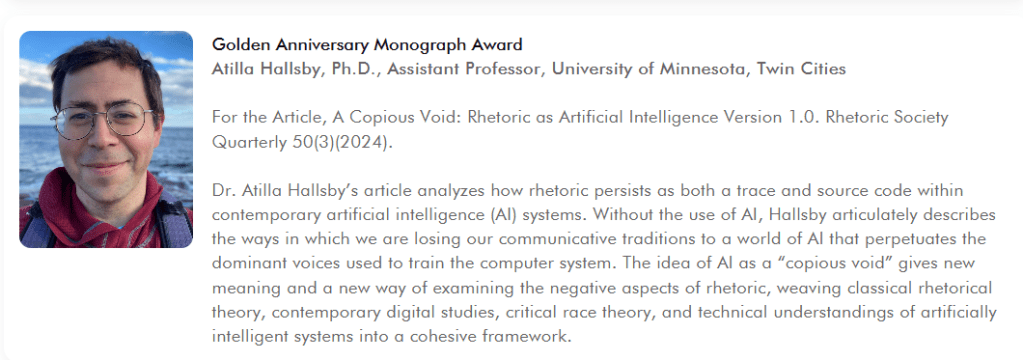
I’m honored to have received the National Communication Association’s Golden Anniversary Monograph Award for my essay, “A Copious Void: Rhetoric as Artificial Intelligence 1.0”!

I’m floored in particular that folks have found the essay to be useful as ai development has intensified in dire, dangerous, and ever more death-centred ways since 2024. I’m so grateful to S. Scott Graham and Zoltan Majdik for their support for this piece and their willingness to include it in their special issue. I am also indebted to Joshua Trey Barnett’s editorial guidance. Truly, this essay would not have turned out as it did had it not been for them and the anonymous reviewers, all of whom made the product immeasurably better.

To that end, please check out the entire “Rhetoric of/with AI” special issue. It is excellent and deserves your attention if you are engaged with this particular topic. There is an amazing introduction from S. Scott Graham & Zoltan Majdik, incredible work on reproductive surveillance from Kem-Laurin L. & Randy Allen Harris, incisive, care-driven criticism on ai as a form of time-traveling memory from Emma Bedor Hiland, genre-based methods from Ryan Omizo & Bill Hart-Davidson, timely reflections on #WallStreetBets from Misti Yang & Zoltan Majdik, and a spicy conclusion from Casey Boyle. Please check it out!

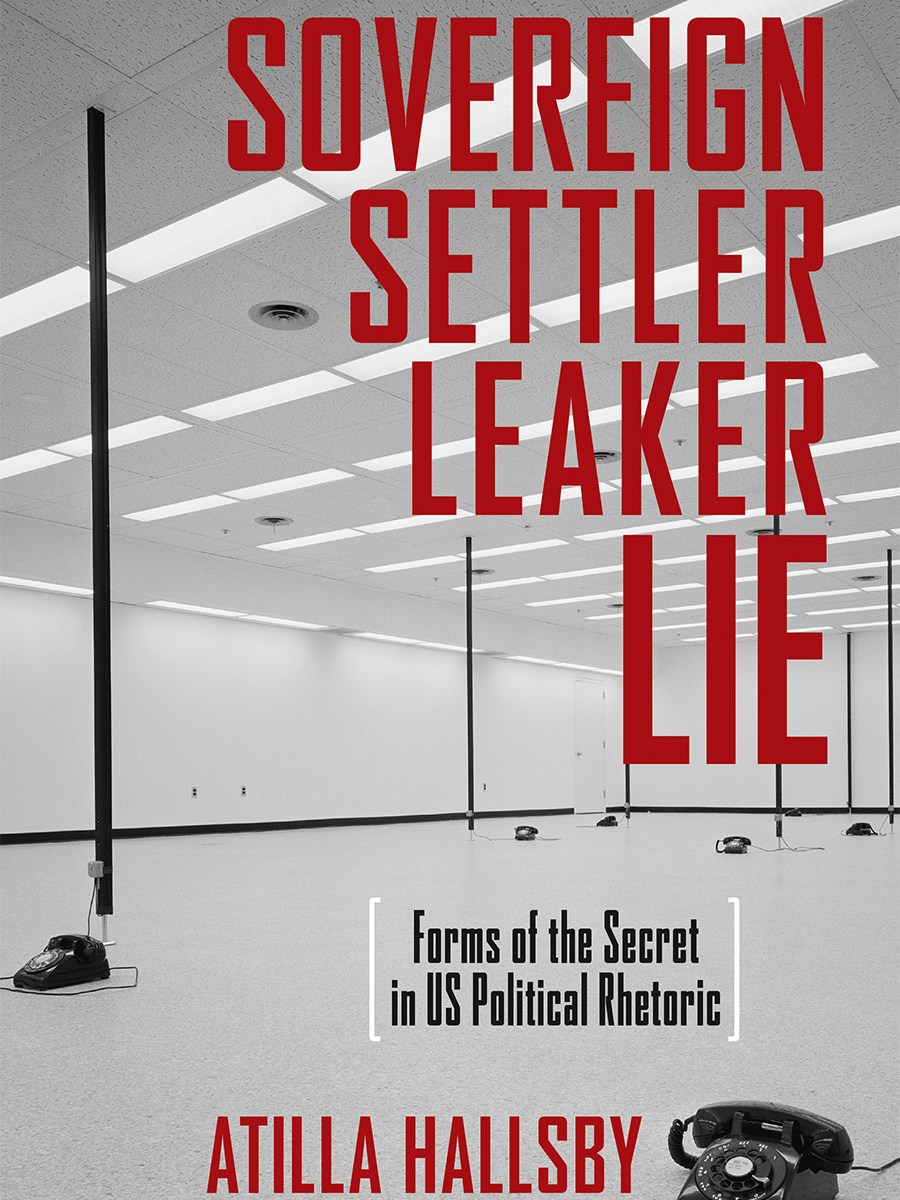
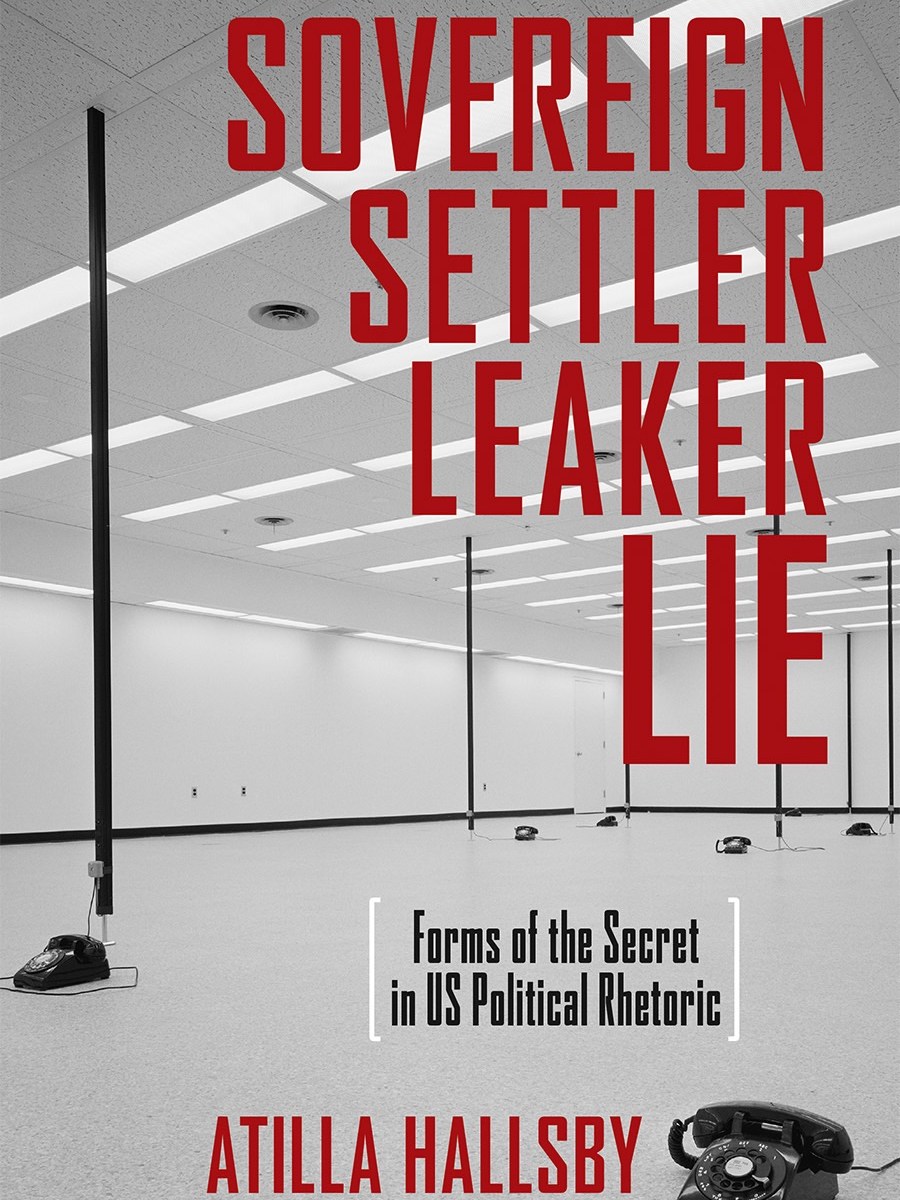
Coming Soon! Sovereign, Settler, Leaker Lie: Forms of the Secret in U.S. Political Rhetoric

To be published by The Ohio State University Press in February 2026

Pre-orders available at the link below. This book will also be released as an open-access title. If you are interested in a desk copy once it becomes available, please reach out! I am happy to respond to requests given availability/demand. Stay tuned and I hope you check it out!

https://ohiostatepress.org/books/titles/9780814216057.html

Book Jacket Description

In Sovereign, Settler, Leaker, Lie, Atilla Hallsby argues that secrets play a pivotal role in organizing political discourse in the United States. Hallsby takes up contemporary case studies—ranging from the Valerie Plame scandal during the George W. Bush presidency, to the use of Saul Alinsky’s name as a partisan codeword for politicizing Obama’s Blackness, to Chelsea Manning’s public naming and outing—to show how dramatic revelations increasingly fail to produce meaningful change and instead reproduce entrenched racial, gendered, and colonial hierarchies.

The core feature of these interlinked moments of crisis is the secret: a rhetorical patterning of political life organized by specific forms, each one lending a familiar shape to the shadows of American empire. These forms, theorized here as tropes, connect decades of secrets, linking the George W. Bush administration’s War on Terror to the Trump-era reemergence of “deep state” conspiracy theories. As an extension of secrecy and surveillance studies, and with the aim of attaining a more accountable and just form of US governmentality, Sovereign, Settler, Leaker, Lie explains how still-unfolding political realities in the United States emerged, transformed, and regenerate.

Reception

“Much work on the secret skirts over its rhetorical form and associated tropes, but Hallsby has written a rigorous, capacious, and highly engaging account that situates the secret historically and culturally. Essential reading for those interested in the politics and aesthetics of secrecy.” —Clare Birchall, author of Radical Secrecy: The Ends of Transparency in Datafied America

“Presented from a psychoanalytic perspective that refuses to collapse into binaries of suspicion and faith, Sovereign, Settler, Leaker, Lie is both reassuring for its ability to ‘name’ contemporary rhetorical dynamics and sobering because, as Freud once put it, we are not masters of our own house.” —Joshua Gunn, author of Political Perversion: Rhetorical Aberration in the Time of Trumpeteering

“Smart, playful, and theoretically sophisticated, Sovereign, Settler, Leaker, Lie introduces us to the hard truths of secrecy in American politics. A one-of-a-kind book.” —Joshua Reeves, coauthor of The Prison House of the Circuit: Politics of Control from Analog to Digital

Sovereign, Settler, Leaker, Lie generatively brings rhetorical studies into conversation with surveillance studies to offer important expansions and correctives to the study of secrecy. Drawing on a rich historical archive that includes figures like Alan Turing, Saul D. Alinsky, Valerie Plame Wilson, and Chelsea Manning, Hallsby powerfully illustrates how secrets are not just in but of discourse. In so doing, he importantly foregrounds the secret’s material impacts and entanglements with racial, sexual, colonial, and gendered violences.” —Mia Fischer, author of Terrorizing Gender: Transgender Visibility and the Surveillance Practices of the U.S. Security State

“This analytically sophisticated book offers a captivating exploration of the often-destructive role of political secrets in society. Whether found in conspiracy theories, national security leaks, or fabrications supporting war, Atilla Hallsby shows how secrets powerfully shape collective knowledge and legitimize forms of violence.” —Torin Monahan, author of Crisis Vision: Race and the Cultural Production of Surveillance
“Rhetoric Unbound” Presentation on 10/26/2025: “From the Secret Report to the Deep State.”

On October 26, I will deliver a “Rhetoric Unbound” lecture as part of a series developed by Dr. Joshua Trey Barnett of Pennsylvania State University. The talk, entitled “Twisted Endings: From the Secret Report to the Deep State,” will take place at 8.00 p.m. Eastern via Zoom. The lecture will last 30 minutes and will be followed by an audience-led discussion.

To register for the lecture, click here.

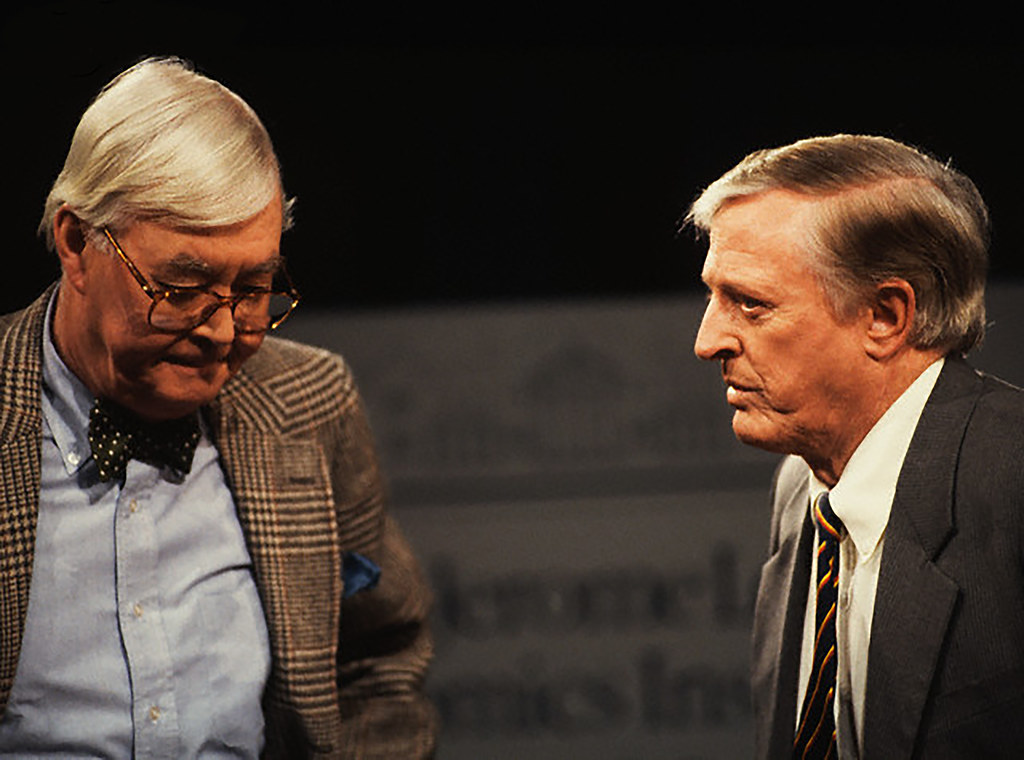
Although the lecture previews my forthcoming monograph, it is comprised of materials that were ultimately not included in the book. The presentation is the shadow side of the book’s conclusion, foregrounding Daniel Patrick Moynihan as a key public figure whose troubled political legacy foreshadowed many of the secret exigencies — urgencies marked by concealment, hiddenness, and conspiratorial rumination — that characterize current crises in the United States.

Lecture Description

Drawing on material excised from Sovereign, Settler, Leaker, Lie (Ohio State University Press, forthcoming 2026), this presentation argues that the secret is a dynamic and rhetorical interplay of absence and desire. Whereas the book addresses the rhetorical form of scandals, dogwhistles, national security leaks, and settler-detective narratives, this talk focuses on the connection between the Moynihan Report (1965), the Pentagon Papers (1971), the Senate Intelligence Committee Report on Torture (2014), and “the deep state.”

The connection between these texts is encapsulated in two principles: (1) there is always a “beyond” to the secret, or that hidden meanings come to light through the restoration of rhetorical context, and (2) the secret is that there is no secret, or that much of what is concealed is a going-through-the-motions that repeats a similar form across many, temporally distant, instances.

I critique the appropriation and dilution of appeals to transparency in contemporary political discourse, particularly in reference to conspiracy theories like the “deep state.” Such theories do not just distort public perceptions by fostering mistrust while masquerading as revelations; they underscore the necessity of discerning the secret’s form and function, a continuous thread that stretches from Daniel Patrick Moynihan to Donald Trump.

Pictured Above: Sen. Daniel Patrick Moynihan and William F. Buckley. Credit: © Wally McNamee/CORBIS; Copyright: © Corbis. All Rights Reserved. Public Domain Mark 1.0 Universal PDM 1.0 Deed. https://creativecommons.org/publicdomain/mark/1.0/

New In Print: “What is Rhetoric Enough? Forms IN and OF Rhetoric Scholarship”in the Journal for the History of Rhetoric

“What is Rhetoric Enough?” was initially presented as the keynote address for the 2024 Midwest Winter Workshop (MWW) hosted by the Department of Communication Arts at the University of Wisconsin-Madison. Although much remains the same, it has been edited from its original outline format for readability and to include citations that were not in the original due to time constraints.

ARTICLE @ Journal for the History of Rhetoric

PROOFS/Article Pre-Print (nearly identical to final version)

MWW VERSION: You can also find the original talk, delivered at the Midwest Winter Workshop in 2024 here.

ABSTRACT: This article poses the question, What is rhetoric enough? as a provocation about the hurdles emerging scholars must traverse. The first is fear that their scholarship is not “enough” to meet the topical, theoretical, and evidentiary standards of rhetoric studies, while the second is the criticism that there is “too much” rhetoric in communication scholarship. Together, these create a wicked polarity. This article answers this question by drawing on the strategy of prepositional criticism, which posits “both/and” answers as affirmative rejoinders to “either/or” framings of rhetoric’s grounding in either tradition or transformation. To that end, it offers five provisions that elaborate distinct forms in and of rhetoric scholarship: (1) rhetoric can be understood as a contained feature in and productive effect of discourse; (2) exigencies define the context in and purpose of scholarship; (3) theory is embedded in and an enactment of rhetorical criticism; (4) community is invoked in and a creation of academic discourse; and (5) citation can be thought of as a way to document scholars’ due diligence in their writing and as an active habit or practice of constituting a conversation.

I am presently at work co-editing a forum with Ariel Seay- Howard of North Carolina State University, assembling a number of other contributors who also responded to this same prompt. The forum is based on a featured panel held at the National Communication Association (NCA) convention in 2024.

About this Essay

My intended audience was graduate students, and my objective was less to provide a comprehensive view of rhetorical studies and more to capture a snapshot of the field based on the community gathered for the 2024 MWW.

One feature that is less apparent in this version is that the many citations – especially those in second section – are drawn primarily from the published scholarship of MWW workshop leaders, many of whom were in the audience for this speech.

Acknowledgments

Thank you to Allyson Gross, Alicen Rushevics, Megan L. Zahay, and Ailea Merriam-Pigg for
their invitation to deliver this 2024 Midwest Winter Workshop (MWW) keynote address, aswell as to Rob Asen, Rob Howard, Jenell Johnson, and Allison Prasch, who are the most
generous interlocutors and incredible hosts.

At the MWW, Cara Finnegan, Rob Asen, and
Rachel Bloom-Pojar asked me important questions that have stuck with me as I edited this final version, and I am grateful to Emily Winderman for her suggestion to address each of the workshop’s faculty mentors. I’m also indebted to Ned O’Gorman for the opportunity to publish this keynote, the participants from the MWW whose encouragement nudged me
toward publishing this essay, and to Lauren Seitz for editorial guidance in bringing this to
print.

Finally, I wish to offer a special thanks to Ariel Seay-Howard, the “What is Rhetoric
Enough?” panelists at NCA 2024, and the Institute for Advanced Studies at the University of Minnesota, Twin Cities for their time, labor, and support for this project.

Open Access Textbook Updates in 2025

Some changes will be coming to the UnTextbook and Reading Rhetorical Theory in 2025!

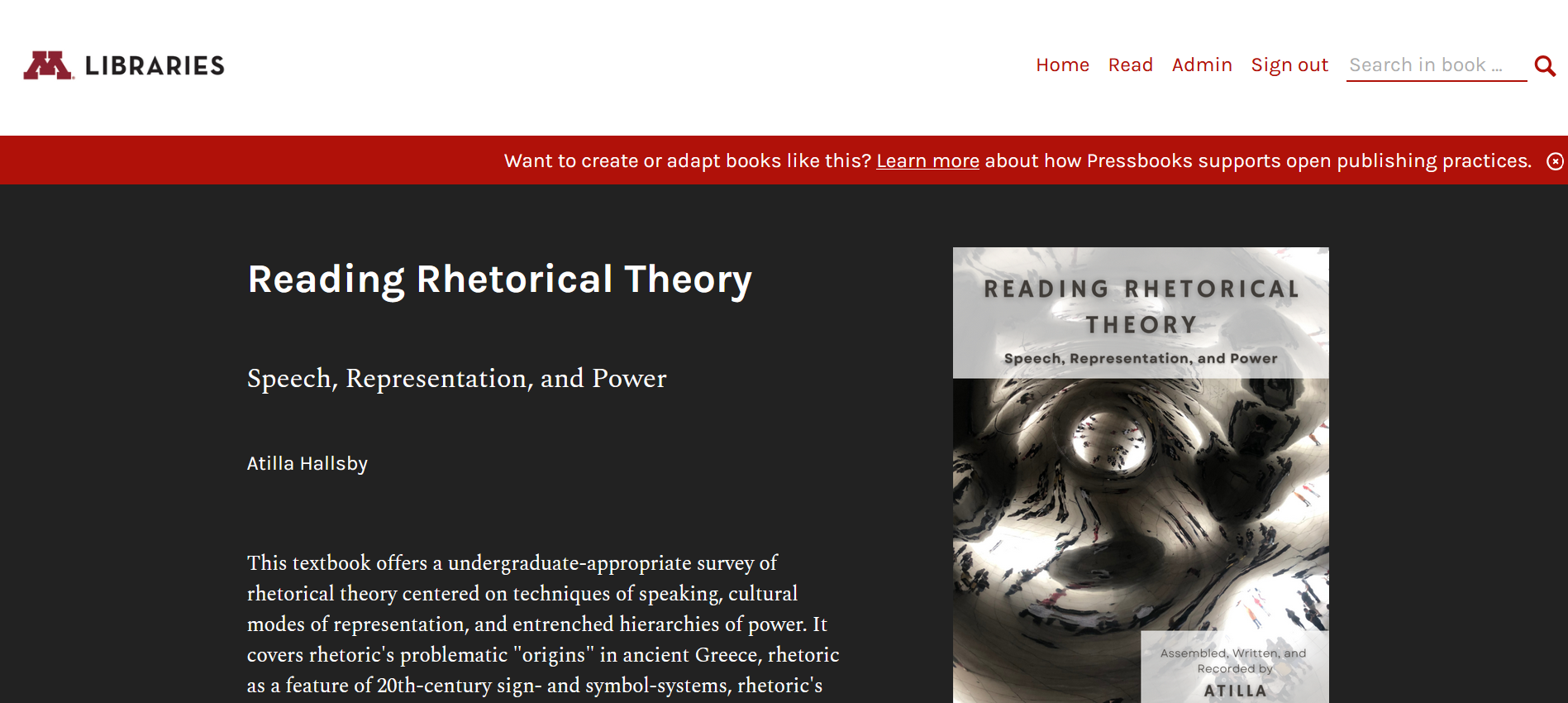
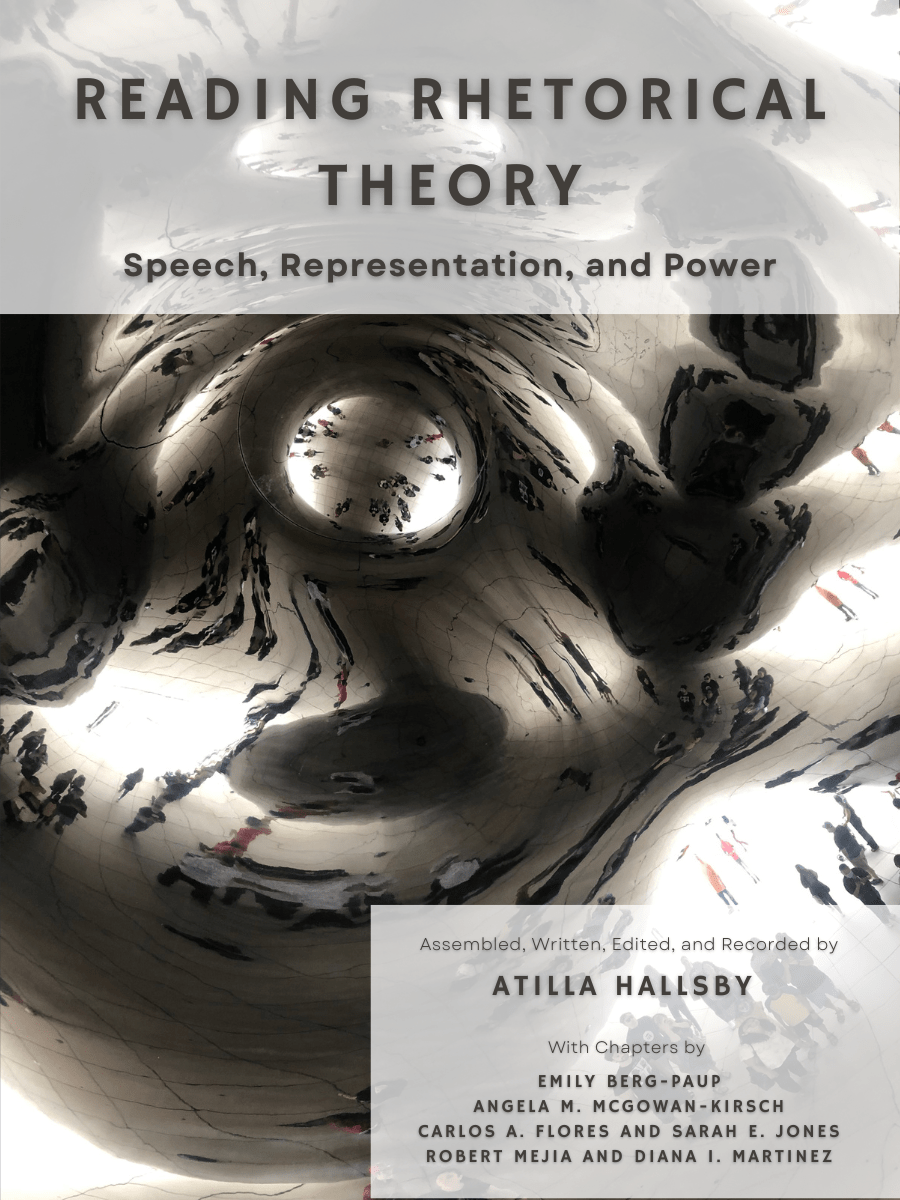
The main chapters of the UnTextbook were published as an online textbook with the University of Minnesota Libraries in 2022 (https://open.lib.umn.edu/rhetoricaltheory/). Publishing this as an online textbook gave this resource an ISBN and allowed it to circulate more widely in online libraries like the OER Commons. As of September 2024, Reading Rhetorical Theory: Speech, Representation, and Power (RRT) has been adopted by more than 60 universities and colleges. The upcoming changes have to do with modifications to Reading Rhetorical Theory and to the front-page design of this website.

Reading Rhetorical Theory, the online textbook version of the UnTextbook of Rhetorical Theory. To view the book, go to https://open.lib.umn.edu/rhetoricaltheory

Find out more about RRT adoptions

If you have been using the UnTextbook or Reading Rhetorical Theory, I would love to have your feedback! I’m collecting testimonials from folks who have found these resources useful. I’ve set up this survey for folks, or you can send me a message at rhetoricaltheoryuntextbook-at-gmail-dot-com. Either would be greatly appreciated!

So, what’s changing?

Updates for Spring-Summer 2025

The UnTextbook is staying open, and you will still be able to access the course content posted there. By June-August 2025, however, some links may change, requiring updates to course syllabi before the Fall.

UPDATE #1: The UnTextbook of Rhetorical Theory

My plan is to replace the chapters on the main UnTextbook page with icons for the textbook and other course offerings:

  1. Reading Rhetorical Theory: Speech, Representation, and Power (this would direct you to the OER site).
  2. The (Undergraduate) UnTextbook Rhetorical Theory (you would be able to access the chapters currently posted on the main page).
  3. The (Graduate) UnTextbook of Rhetorical Theory.
  4. The Rhetoric of Secrecy and Surveillance.

UPDATE #2: Reading Rhetorical Theory

All Updates and Changes to RRT

The largest change to RRT is four new chapters from invited authors to Reading Rhetorical Theory in Spring 2025. This has required reorganizing the chapter order of that book. The new chapters include:

  • “The Public Sphere” by Angela McGowan Kirsch
  • “Counterpublics” by Carlos A. Flores and Sarah E. Jones
  • “Latine Rhetorical Theory” by Robert Mejia and Diana I. Martinez
  • “Rhetoric and the First Amendment” by Emily Berg Paup

Some things to note:

(1) the new chapters will not appear on the UnTextbook site.

(2) Although the order of the chapters is slightly changed as compared to what appears on this site, the content is identical (save for some new images).

(3) As always, there is no chapter 13.

(4) The links to “The Public Sphere” and “Counterpublics” will be ready in January 2025; the links to “Latinx Rhetoric(s)” and “Rhetoric and the First Amendment” will go live later.

(5) Finally, if you are considering switching from the UnTextbook to Reading Rhetorical Theory, know that the latter is more recently updated and has been copy-edited, meaning the content you’ll find there is likely more grammatically correct and up-to-date.

You can find updated links for the textbook below if you are looking to adjust your syllabus for an upcoming semester. The guest-authored chapters will go ‘live’ in early Spring semester 2025, but the links should stay consistent.

Updated ToC for Reading Rhetorical Theory

Part 1: Speech

Part 2: Representation

Part 3: Power

Assignments and Study Guides

New Book Chapter: “Pain, Pleasure, and the Mirror of Enjoyment”

This chapter, authored with Joshua Gunn of University of Texas at Austin, theorizes “the mirror of enjoyment,” a dynamic of projective disidentification in which the (liberal) other’s pleasure comes at the expense of the (conservative) ego. Set in the context of the early COVID-19 pandemic, the chapter offers multiple examples of how pain offers a mode of political affirmation that confirms the subject’s identity through self-righteous rituals of suffering.

It opens by explaining the mirror of enjoyment, while each subsequent section explains this concept at work in relation to a unique anecdote drawn from the COVID-19 era. The first is about sadistic pleasure and discusses police officers’ resistance to vaccine mandates nationwide. Here, enjoyment takes the familiar form of ressentiment, a revenge taken out upon both self and other. The second is the zero-sum-game, which places Giorgio Agamben alongside the deep state conspiracy mongering of Alex Jones and Joe Rogan. Here, enjoyment manifests as state phobia, a paranoid rejection of governing institutions. The final section, titled ill-liberalism and the drive, stages an imaginary dialogue between Supreme Court Justice Stephen Breyer’s The Authority of the Court and the Peril of Politics and Robert F. Kennedy’s The Real Anthony Fauci, both of which bespeak a faith in rational governing norms while perpetuating the continued politicization of governing institutions and infectious disease response alike.

The chapter is published in Pleasure and Pain in US Public Culture (University of Alabama Press, 2024), edited by John Louis Lucaites and Christopher Gilbert. You can find a copy of the chapter below:

https://www.dropbox.com/scl/fi/tuow45ha5li8hm2ry6706/Pain-Pleasure-and-the-Mirror-of-Enjoyment.pdf?rlkey=r7s16isoyobd472y10njl7ton&dl=0

New Open-Access Publication: “Reconstructing Kairos and Chronos Across Trump’s Twitter/X Corpus: Computational Methods + Rhetorical Critique” in the Western Journal of Communication

Recently published in the Western Journal of Communication, this OA publication co-authored with Dan Faltesek of Oregon State University offers a hybrid computational-rhetorical take on Trump’s first term. It employs a MALLET (machine learning) topic model to periodize his (almost) full Twitter corpus (c. 2010-2020).

Our key finding is that in different periods of his twitter life distinct patterns can be identified in the post-to-post flow of Trump Twitter, and that these arguments are substantially more coherent and important than any particular tweet.

You can find the full abstract below the link

https://www.tandfonline.com/doi/full/10.1080/10570314.2024.2396506

Abstract: The collective force of ex-U.S. President Donald Trump’s tweets/Xs is palpable in American public culture, political discourse, and academic rhetorical criticism. Adopting a critical and computational approach, this essay offers a novel method for the rhetorical analysis of social media-based public address by shifting emphasis from memorable exemplars of Trump’s social media discourse to the flow dynamics between those tweets/Xs. Focused on loops of Tweets as recursive argument systems, we use a Latent Dirichlet Allocation (LDA) Markov Chain analysis to offer insight into the kairotic and chronic patterning of Trump’s social media utterances to map more and less stable argument strategies across distinct periods of his first Twitter/X presidency.

New Teaching Resources: (Fall 2024) Graduate Seminar in Rhetorical Theory

With the approaching Fall 2024 semester, I’m posting some of the course resources I’ve assembled for my upcoming graduate seminar! I typically divide my course materials into several resource documents that allow students to access the course schedule/readings, assignment descriptions, day-to-day agendas, and handouts for my class.

Course Policies and Syllabus

This document contains course policies and the course schedule. Each topic heading of the syllabus (Race, Affect, Secrecy, Radicalization, Context, Canon, Form, Algorithm, Space, Time, Matter) includes an iceberg-like extended resource bibliography for papers, projects, and exams. 

Assignment Guidelines

This document contains writing advice as well as detailed instructions for presentations, responses, short papers, exams, and paper-length projects. Not all of the assignments described in this document will be assigned in a given semester. 

Weekly Agendas

Contains the plan for discussion on a given day of our graduate seminar.  Actively updated week to week.

Handout and Resource Repository

An index for the course. It contains items that I intend to distribute to the class (see below) and hyperlinks to the documents provided above. So far, my handouts for the semester include:

Primers (introductory materials)

I use my UnTextbook site to post the course notes generated in previous semesters, which function as introductory resources for each unit in subsequent semesters.

New Open-Access Publication: “A Copious Void: Rhetoric as Artificial Intelligence Version 1.0”

I’m happy to announce the publication of “A Copious Void: Rhetoric as Artificial Intelligence Version 1.0” in Rhetoric Society Quarterly. Here’s the abstract:

Rhetoric is a trace retained in and by artificial intelligence (AI) technologies. This concept illuminates how rhetoric and AI have faced issues related to information abundance, entrenched social inequalities, discriminatory biases, and the reproduction of repressive ideologies. Drawing on their shared root terminology (stochastic/artifice), common logic (zero-agency), and similar forms of organization (trope+algorithm), this essay urges readers to consider the etymological, ontological, and formal dimensions of rhetoric as inherent features of contemporary AI.

The essay is part of a special issue on the subject of rhetoric and artificial intelligence. I encourage you to check out the entire thing.

It features amazing work from Misti Yang (w/ Zoltan Majdik) about Wallstreetbets and the pathologic of rhetoric/AI, as well as by Bill Hart-Davidson (w/ Ryan Omizo), whose essay is about genre and fake writing detection. I got to hear about Emma Bedor Hiland’s essay on AI, writing, and time travel at NCA, where I was likewise floored by Kem-Laurin Lubin’s essay (w/ Randy Allen Harris) on reproductive tracking and ethopoeia. Casey Boyle’s response — where he embodies the writing position of a chatbot — is also up; it is reluctantly written, but also hilarious, insightful, and not to be missed. I’m so grateful to be alongside these folks in this issue.

You can find the full essay, open access, here.

Research Presentation for the Institute for Advanced Studies: “The Settler’s Secret: Analepsis, Paralipsis, Prolepsis”

On February 27th, 2024, I delivered a research presentation as part of a spring semester fellowship with the Institute for Advanced Studies at the University of Minnesota, Twin Cities Campus. The presentation draws on a recently completed chapter of my manuscript, which is likewise titled “The Settler’s Secret.”

I had previously presented a longer version of this presentation for the Department of Communication Arts at the University of Wisconsin Madison on February 15, 2024, as part of their Rhetoric, Politics, and Culture Colloquium Series. My thanks go out to Drs. Allison Prasch, Rob Asen, Jennell Johnson, Rob Howard, Mary McCoy, and the graduate students of Communication Arts at UW Madison for extending this invitation and opportunity to share research.

Abstract/Synopsis: The presentation examines narrative tropes that characterize the psyche and worldview of the “settler subject”—the Western protagonist across stories of neocolonial conquest. Specifically, this settler subject adopts the role of detective, imagining themselves as a detector of atrocities while disavowing complicity in the systems of violence they discover. Rather than drawing on the detective’s substantive traits, this egoic position is triangulated by narrative tropes: analepsis (past), paralipsis (present), and prolepsis (future). Rhetorically, the prefixes ana-, para-, and pro- evoke forms of self-effacement that place the settler “in the middle of things,” as the main character in a story that is not about them. Analepsis establishes the settler’s narrative past by rewriting history, paralipsis enables the settler to acknowledge but disidentify with neocolonial acts, and prolepsis forecasts apocalyptic outcomes that perversely reinforce the settler’s need for continuous armament. Each trope also aligns with a psychoanalytic register – the Symbolic, Imaginary, and Real, respectively – which manage the absent center of settler subjectivity. The discussion of each trope is paired with a unique collection of texts to demonstrate the dispersion of these subject-constituting tropes across coverage of contemporary, high-tech war.