
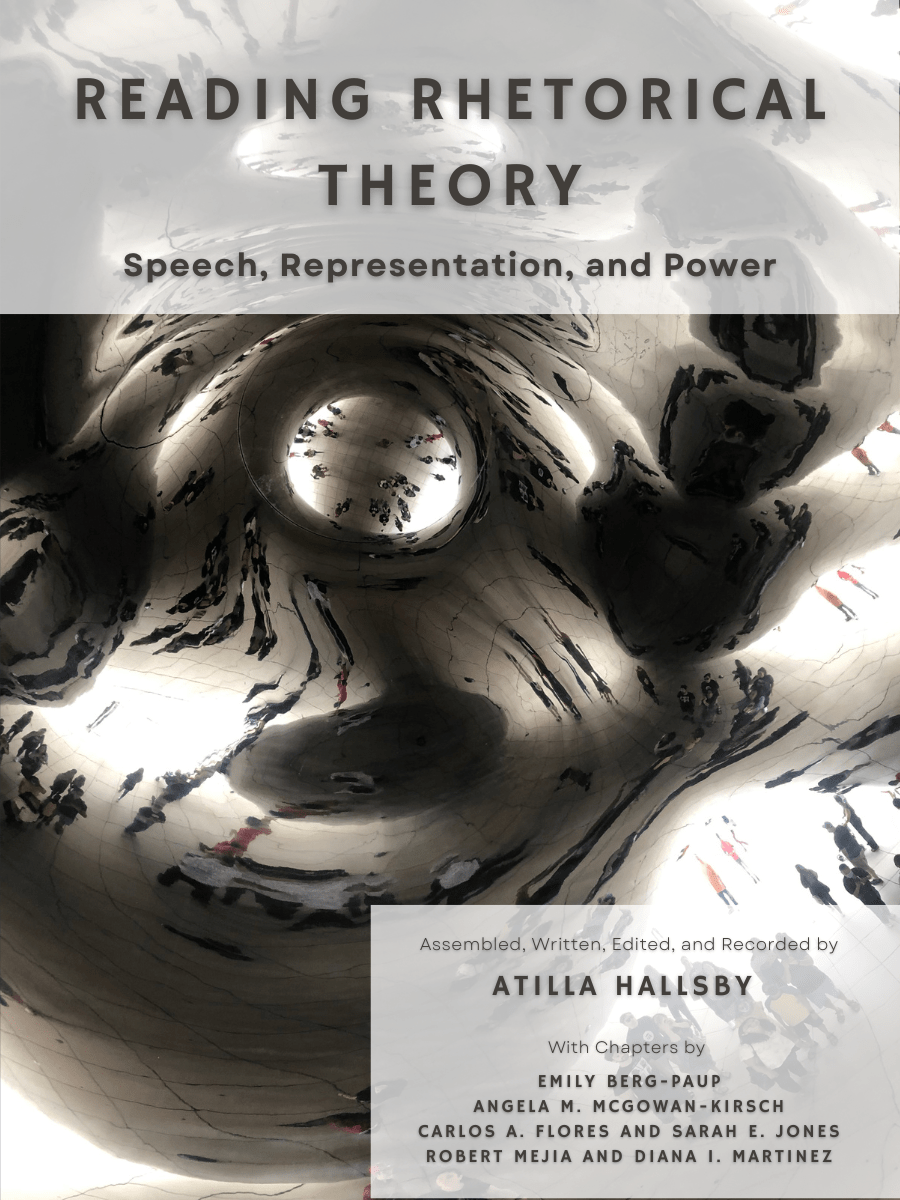
As folks prepare for a new semester, I wanted to encourage you to check out version 2.0 of Reading Rhetorical Theory: Speech, Representation, and Power. This online textbook is the edited and expanded version of the undergraduate rhetorical theory resources first made available on the main page of The Rhetoric UnTextbook. The book does not need to be assigned as a whole; rather, the individual chapters are intended to be assigned as might fit the needs of rhetoric instructors’ preferred order and topics.
New Additions/Chapters
Reading Rhetorical Theory has been re-organized into three sections, with a new, brief introduction to each: (1) Speech, (2) Representation, and (3) Power. These also now contain four new chapters by guest authors!
- Chapter 4: Rhetoric and the Freedom of Expression by Emily Berg Paup examines the multifaceted nature of the right to freedom of speech and its development and connection to the rhetorical tradition. It will explore these ideas through their theoretical foundations, historical development, and the ongoing struggle to ensure their equitable application.
- Chapter 9: The Public Sphere by Angela M. McGowan-Kirsch explores rhetoric and symbolic action in the context of civic engagement. It focuses on actions related to systems’ efforts on individuals and communities, individuals’ activities to participate in their communities, active citizenship, symbolic actions that have built stronger communities, and the advancement of social justice in democracy.
- Chapter 10: Counterpublics by Carlos A. Flores and Sarah E. Jones focuses on the relationship between theories of the public sphere and rhetorical theory. The first part of this chapter presents a detailed history and foundational definitions of the public sphere, while the second explores critiques of the foundational concept of the public sphere vis-à-vis counterpublics and several contemporary case studies.
- Chapter 15: Latine Rhetorical Theory by Robert Mejia and Diana I. Martínez discusses the emergence of Latine rhetorical theory and criticism in the field of communication. Latine scholars and non-Latine scholars have worked to bring Latine rhetoric, concepts, and topics into the field. It offers the rhetorical concepts and methods of the prominent Chicana feminist Gloria Anzaldúa, the nepantla rhetorical methodology, the groundbreaking theologian Gustavo Gutiérrez, and his framework of radical hope.
Future Updates
For folks who are more familiar with my Rhetoric UnTextbook blog site, please know that this resource is still up and running, and you can still access the original undergraduate-level rhetorical theory, graduate-level rhetorical theory, and upper-level undergraduate secrecy surveillance course resources. In future semesters, however, I intend to concentrate on updates to Reading Rhetorical Theory, including
- AI policy guidance and resource glossary
- Citation information for each chapter
- A glossary and chapter keywords
- Updates to “digital rhetoric” concerning AI/LLM technologies
- Updates to “the rhetoric of secrecy and surveillance” related to the release of Sovereign, Settler, Leaker, Lie
Additional Resources
As always, I am happy to share additional teaching resources related to this textbook with verified instructors. quiz and exam questions to this email. These include exam/quiz questions, recent syllabi, written assignment descriptions, a day-to-day agenda, and recently used slides. Additionally, I deeply appreciate correction notices for content and/or broken links and have set up a survey for instructors and students to provide their informal feedback about what is working and what could use further improvement. The book is also listed on the Open Textbook Library – I would greatly appreciate your review if you have used the resource!
Open for Submissions
Finally, should you and/or a coauthor wish to contribute chapters or content to Reading Rhetorical Theory, we are open for future submissions. Version 2.0 benefited from a PALM (Partnership for Affordable Learning Materials) grant awarded by the University of Minnesota Libraries, which enabled us to compensate contributors for their work. We would be glad to continue developing this model for equitable publication. We seek additional chapters on the intersections of rhetorical theory with disability, race, gender, activism, sound studies, and other related topics. Contributors would be listed as authors on the textbook and would be cited in the style of an edited volume. Please reach out if you are interested!
 Atilla Hallsby