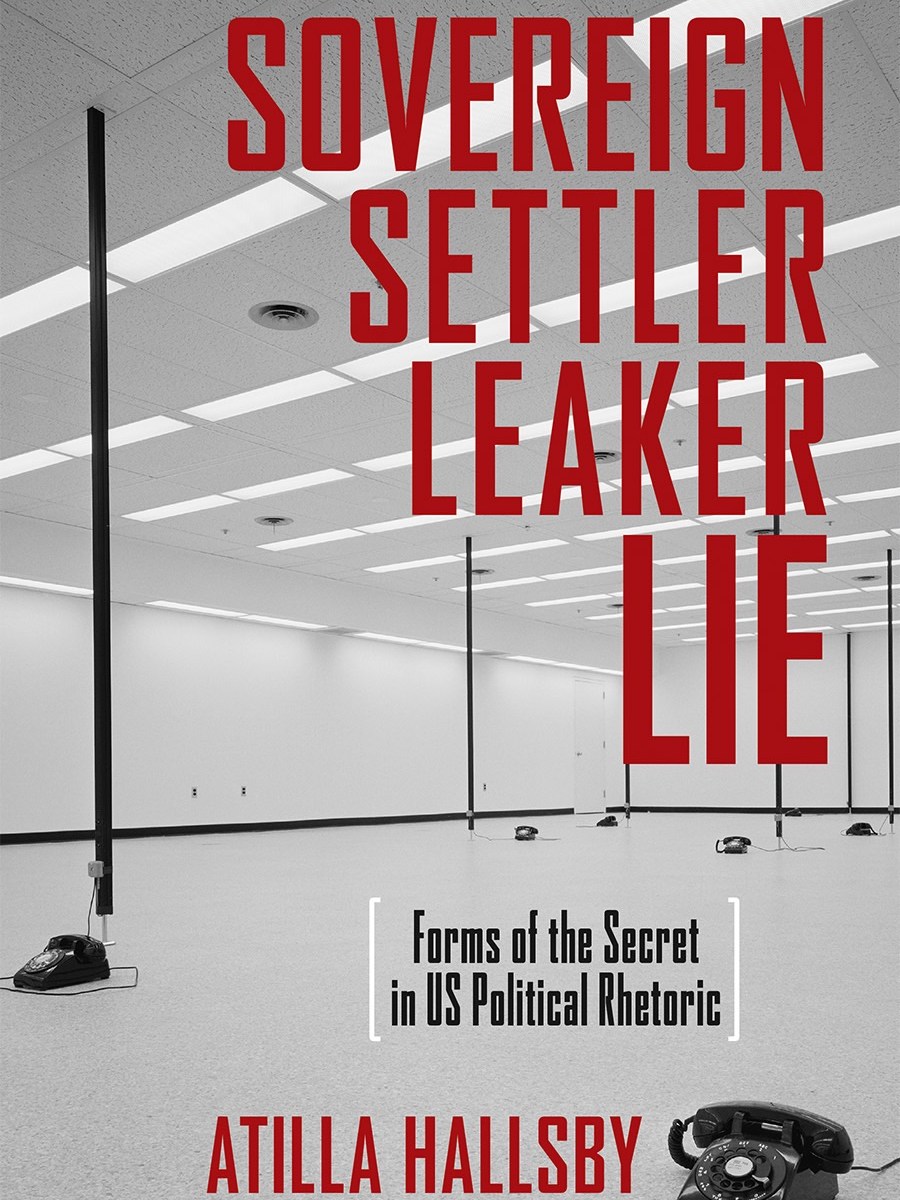
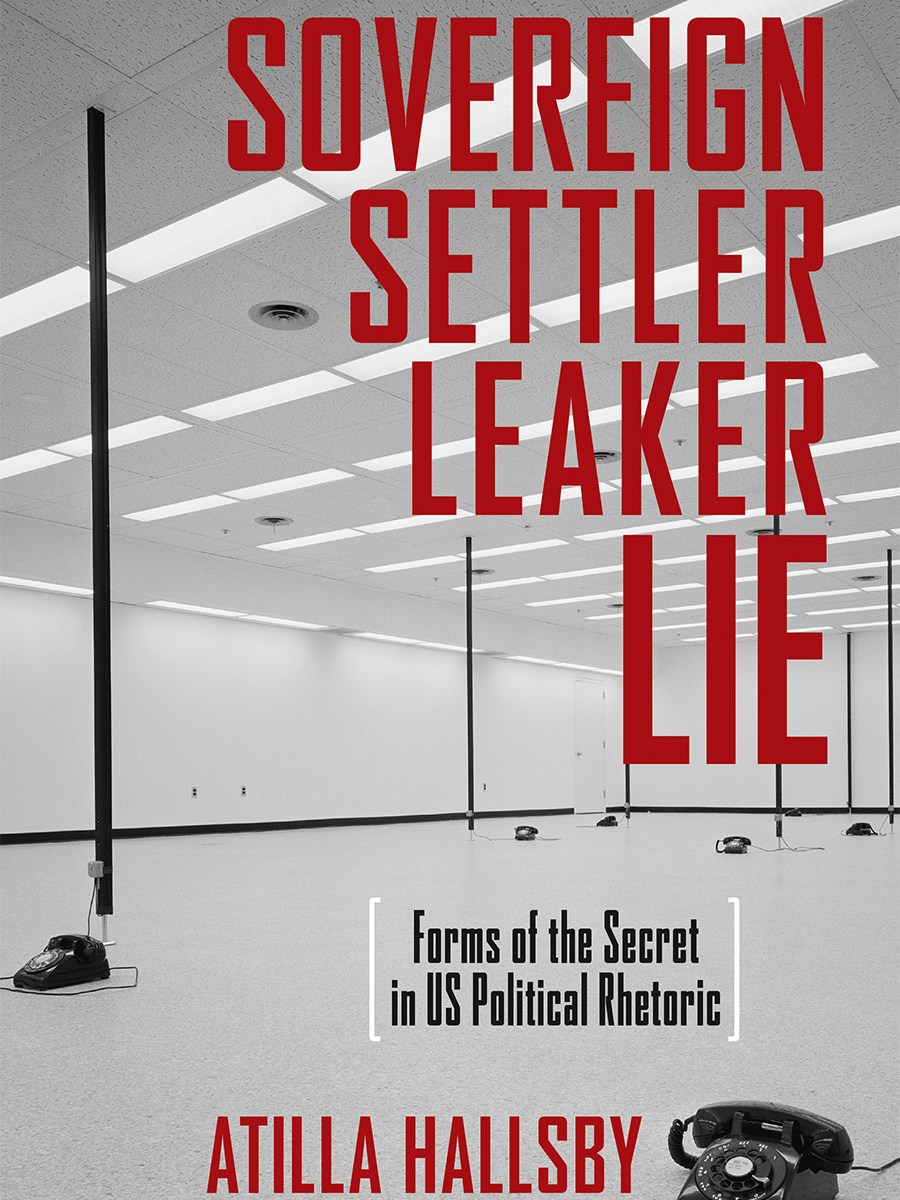
Coming Soon! Sovereign, Settler, Leaker Lie: Forms of the Secret in U.S. Political Rhetoric

To be published by The Ohio State University Press in February 2026

Pre-orders available at the link below. This book will also be released as an open-access title. If you are interested in a desk copy once it becomes available, please reach out! I am happy to respond to requests given availability/demand. Stay tuned and I hope you check it out!

https://ohiostatepress.org/books/titles/9780814216057.html

Book Jacket Description

In Sovereign, Settler, Leaker, Lie, Atilla Hallsby argues that secrets play a pivotal role in organizing political discourse in the United States. Hallsby takes up contemporary case studies—ranging from the Valerie Plame scandal during the George W. Bush presidency, to the use of Saul Alinsky’s name as a partisan codeword for politicizing Obama’s Blackness, to Chelsea Manning’s public naming and outing—to show how dramatic revelations increasingly fail to produce meaningful change and instead reproduce entrenched racial, gendered, and colonial hierarchies.

The core feature of these interlinked moments of crisis is the secret: a rhetorical patterning of political life organized by specific forms, each one lending a familiar shape to the shadows of American empire. These forms, theorized here as tropes, connect decades of secrets, linking the George W. Bush administration’s War on Terror to the Trump-era reemergence of “deep state” conspiracy theories. As an extension of secrecy and surveillance studies, and with the aim of attaining a more accountable and just form of US governmentality, Sovereign, Settler, Leaker, Lie explains how still-unfolding political realities in the United States emerged, transformed, and regenerate.

Reception

“Much work on the secret skirts over its rhetorical form and associated tropes, but Hallsby has written a rigorous, capacious, and highly engaging account that situates the secret historically and culturally. Essential reading for those interested in the politics and aesthetics of secrecy.” —Clare Birchall, author of Radical Secrecy: The Ends of Transparency in Datafied America

“Presented from a psychoanalytic perspective that refuses to collapse into binaries of suspicion and faith, Sovereign, Settler, Leaker, Lie is both reassuring for its ability to ‘name’ contemporary rhetorical dynamics and sobering because, as Freud once put it, we are not masters of our own house.” —Joshua Gunn, author of Political Perversion: Rhetorical Aberration in the Time of Trumpeteering

“Smart, playful, and theoretically sophisticated, Sovereign, Settler, Leaker, Lie introduces us to the hard truths of secrecy in American politics. A one-of-a-kind book.” —Joshua Reeves, coauthor of The Prison House of the Circuit: Politics of Control from Analog to Digital

Sovereign, Settler, Leaker, Lie generatively brings rhetorical studies into conversation with surveillance studies to offer important expansions and correctives to the study of secrecy. Drawing on a rich historical archive that includes figures like Alan Turing, Saul D. Alinsky, Valerie Plame Wilson, and Chelsea Manning, Hallsby powerfully illustrates how secrets are not just in but of discourse. In so doing, he importantly foregrounds the secret’s material impacts and entanglements with racial, sexual, colonial, and gendered violences.” —Mia Fischer, author of Terrorizing Gender: Transgender Visibility and the Surveillance Practices of the U.S. Security State

“This analytically sophisticated book offers a captivating exploration of the often-destructive role of political secrets in society. Whether found in conspiracy theories, national security leaks, or fabrications supporting war, Atilla Hallsby shows how secrets powerfully shape collective knowledge and legitimize forms of violence.” —Torin Monahan, author of Crisis Vision: Race and the Cultural Production of Surveillance
“Rhetoric Unbound” Presentation on 10/26/2025: “From the Secret Report to the Deep State.”

On October 26, I will deliver a “Rhetoric Unbound” lecture as part of a series developed by Dr. Joshua Trey Barnett of Pennsylvania State University. The talk, entitled “Twisted Endings: From the Secret Report to the Deep State,” will take place at 8.00 p.m. Eastern via Zoom. The lecture will last 30 minutes and will be followed by an audience-led discussion.

To register for the lecture, click here.

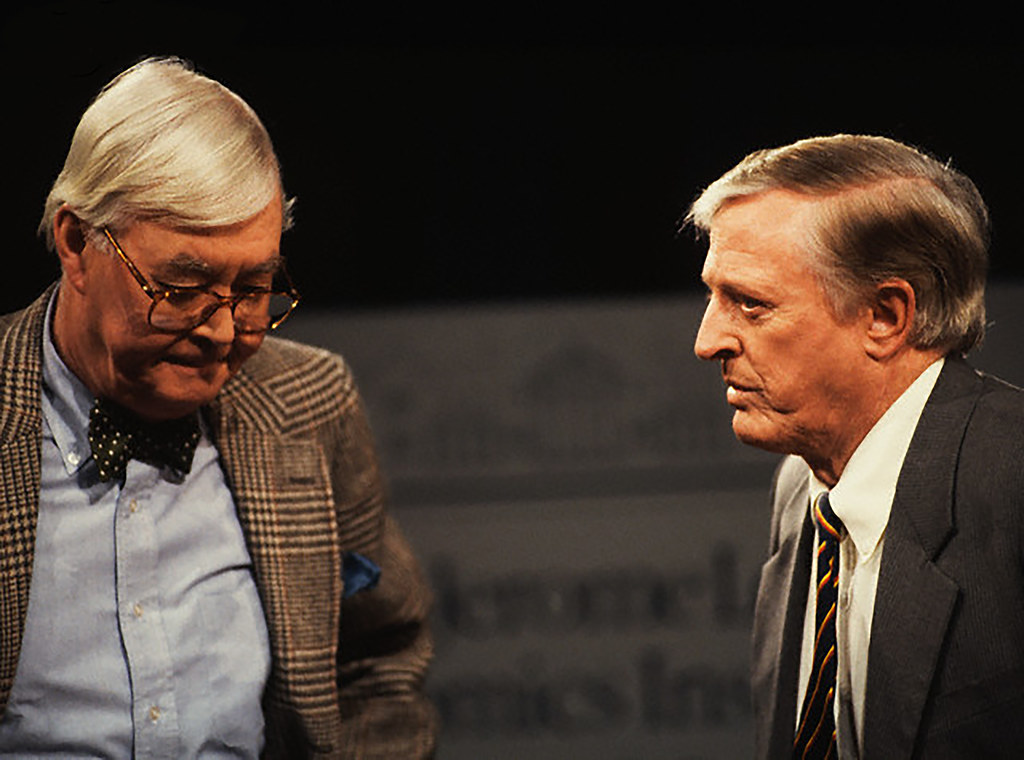
Although the lecture previews my forthcoming monograph, it is comprised of materials that were ultimately not included in the book. The presentation is the shadow side of the book’s conclusion, foregrounding Daniel Patrick Moynihan as a key public figure whose troubled political legacy foreshadowed many of the secret exigencies — urgencies marked by concealment, hiddenness, and conspiratorial rumination — that characterize current crises in the United States.

Lecture Description

Drawing on material excised from Sovereign, Settler, Leaker, Lie (Ohio State University Press, forthcoming 2026), this presentation argues that the secret is a dynamic and rhetorical interplay of absence and desire. Whereas the book addresses the rhetorical form of scandals, dogwhistles, national security leaks, and settler-detective narratives, this talk focuses on the connection between the Moynihan Report (1965), the Pentagon Papers (1971), the Senate Intelligence Committee Report on Torture (2014), and “the deep state.”

The connection between these texts is encapsulated in two principles: (1) there is always a “beyond” to the secret, or that hidden meanings come to light through the restoration of rhetorical context, and (2) the secret is that there is no secret, or that much of what is concealed is a going-through-the-motions that repeats a similar form across many, temporally distant, instances.

I critique the appropriation and dilution of appeals to transparency in contemporary political discourse, particularly in reference to conspiracy theories like the “deep state.” Such theories do not just distort public perceptions by fostering mistrust while masquerading as revelations; they underscore the necessity of discerning the secret’s form and function, a continuous thread that stretches from Daniel Patrick Moynihan to Donald Trump.

Pictured Above: Sen. Daniel Patrick Moynihan and William F. Buckley. Credit: © Wally McNamee/CORBIS; Copyright: © Corbis. All Rights Reserved. Public Domain Mark 1.0 Universal PDM 1.0 Deed. https://creativecommons.org/publicdomain/mark/1.0/

Research Presentation for the Institute for Advanced Studies: “The Settler’s Secret: Analepsis, Paralipsis, Prolepsis”

On February 27th, 2024, I delivered a research presentation as part of a spring semester fellowship with the Institute for Advanced Studies at the University of Minnesota, Twin Cities Campus. The presentation draws on a recently completed chapter of my manuscript, which is likewise titled “The Settler’s Secret.”

I had previously presented a longer version of this presentation for the Department of Communication Arts at the University of Wisconsin Madison on February 15, 2024, as part of their Rhetoric, Politics, and Culture Colloquium Series. My thanks go out to Drs. Allison Prasch, Rob Asen, Jennell Johnson, Rob Howard, Mary McCoy, and the graduate students of Communication Arts at UW Madison for extending this invitation and opportunity to share research.

Abstract/Synopsis: The presentation examines narrative tropes that characterize the psyche and worldview of the “settler subject”—the Western protagonist across stories of neocolonial conquest. Specifically, this settler subject adopts the role of detective, imagining themselves as a detector of atrocities while disavowing complicity in the systems of violence they discover. Rather than drawing on the detective’s substantive traits, this egoic position is triangulated by narrative tropes: analepsis (past), paralipsis (present), and prolepsis (future). Rhetorically, the prefixes ana-, para-, and pro- evoke forms of self-effacement that place the settler “in the middle of things,” as the main character in a story that is not about them. Analepsis establishes the settler’s narrative past by rewriting history, paralipsis enables the settler to acknowledge but disidentify with neocolonial acts, and prolepsis forecasts apocalyptic outcomes that perversely reinforce the settler’s need for continuous armament. Each trope also aligns with a psychoanalytic register – the Symbolic, Imaginary, and Real, respectively – which manage the absent center of settler subjectivity. The discussion of each trope is paired with a unique collection of texts to demonstrate the dispersion of these subject-constituting tropes across coverage of contemporary, high-tech war.

DRPC Privacy Week Presentation: “We Live In Public”

On January 22, 2024, the Digital Rhetoric and Privacy Collective hosted an online session titled “Teaching About Privacy in an Age of Generative AI“ with Drs. Calvin Pollak of the University of Washington (who presented “Navigating Publicity and Privacy: Genre-Based Technical Communication Pedagogy With, For, and Against ChatGPT”) and Reed Hepler, a Digital Initiatives Librarian and Archivist at College of Southern Idaho (who presented “Deliberately Safeguarding Privacy and Confidentiality in the Era of Generative AI”) and myself. The title of my presentation was “We Live in Public: Teaching Publicity, Privacy, and Secrecy.” Links to both the DRPC and a video of the presentation(s) can be found below.

“Recanonizing Rhetoric: The Secret IN and OF Discourse” in the Journal for the History of Rhetoric

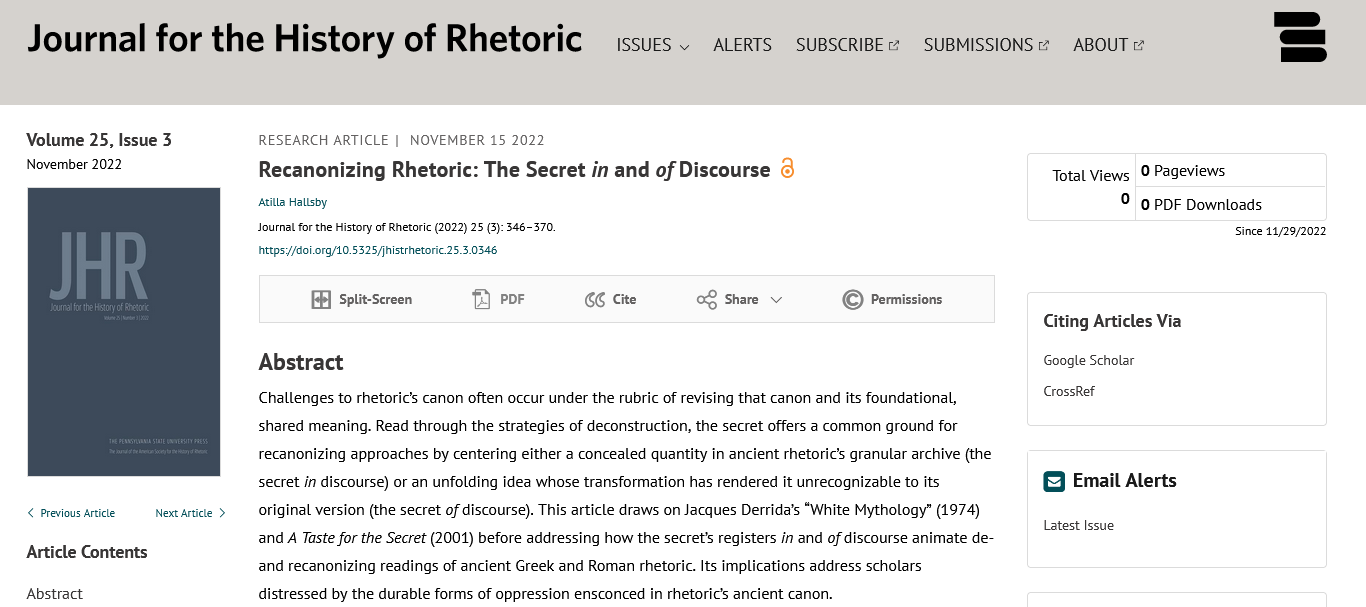
I’m happy to share my newly published, open access article on the secrecy of rhetoric’s canon, just published in the Journal for the History of Rhetoric! “Recanonizing Rhetoric: The Secret in and of Discourse” takes stock of current scholarly conversations about rhetoric’s ancient Greek canon and why we should and should not make a “return” to these commonplaces. My hope is that it will be useful for folks who teach the ancient Greek canon as a problematic point of departure for rhetoric; that is, a beginning that cannot be accepted at face value, but demands relentless scrutiny.

It also offers two examples of why it is productive to imagine of this canon as a twofold secret. On the one hand, this secret may be understood as a history of acts of violence that have been deeply buried, repressed and concealed (in discourse). On the other hand, this secret is a retroactive realization (of discourse) in which concepts and terminology transform to reflect theorists’ investments in empire and conquest.

Here is the abstract from the publication:

Challenges to rhetoric’s canon often occur under the rubric of revising that canon and its foundational, shared meaning. Read through the strategies of deconstruction, the secret offers a common ground for recanonizing approaches by centering either a concealed quantity in ancient rhetoric’s granular archive (the secret in discourse) or an unfolding idea whose transformation has rendered it unrecognizable to its original version (the secret of discourse). This article draws on Jacques Derrida’s “White Mythology” (1974) and A Taste for the Secret (2001) before addressing how the secret’s registers in and of discourse animate de- and recanonizing readings of ancient Greek and Roman rhetoric. Its implications address scholars distressed by the durable forms of oppression ensconced in rhetoric’s ancient canon.

“Rhetorical Forms of the Secret” and Other Presentations at NCA 2022

This year at the 2022 National Communication Association Convention, I am presenting (remotely/virtually) a truncated version of the introduction to my book, This Page Left Intentionally Blank: Rhetorical Forms of the Secret. The presentation is scheduled to appear during a Thursday 11/19 11:00am-12:00pm session entitled “Secrecy and Memory in Popular and Political Culture.” (Sheraton, Napoleon Ballroom C2 on the 3rd Floor) If you are interested in the topic, there is other excellent work being presented there by Christopher Wernecke and Virginia Massignan of Georgia State University, Julia Khrebtan-Hörhager of Colorado State University, and Patrick K Jones of Northeastern University. Please do attend if you have the opportunity!

If you are/were unable to attend the panel and would like to see what I am up to, I’ve included the abstract and my video presentation below.

Presentation Abstract: Secrets are part of a longstanding rhetorical situation best understood as a “spectacle” that draws public audiences in through the promise of revelation. They also comprise a longstanding topos for Rhetorical Studies as a mode of public address, a hidden meaning uncovered by a hermeneutics of suspicion, and a function of discursive totalities like the apparatus and assemblage. Here I add a fourth approach: a tropology of secrecy structured around naming, belatedness, and autoimmunity.

Finally, if you’re at NCA 2022, please consider attending these other excellent sessions I had a small part in assembling. I wish I could be there, but I wish the best to everyone down in New Orleans this week!

Re-Parsing Public Address: Computational Objects, Methods, and Ethics in Rhetorical Studies Thursday, November 17, 8:00am-9:15am (Marriott, Galerie 4 – 2nd Floor)

Session Description: Rhetoric’s objects and methods are changing amidst the spectacular rise of computational methods and big data analysis. Reflecting on rhetoric’s changing objects (e.g., tweets, memes, blogs, chatbots, cybersecurity, infrastructures, and networks) and methods (e.g., LDA, web scraping, TensorFlow, network analysis) this panel stages a conversation between rhetorical scholars who have expanded the scope of what counts as rhetoric’s objects and its methods. Our discussion takes stock of the ethical mandates and novel innovations in the new digital rhetoric by offering short position papers from a range of scholars with deep investments in the computational, followed by a moderated discussion with the audience.

Featured Roundtable Speakers: Andre E. Johnson, Emma Bedor Hiland, Daniel Faltesek, Heather Woods, Alex McVey, Jennifer Buchan, Jules Wight, Michael Lechuga, Misti Yang, Scott Graham, Sergio Fernando Juarez, Zoltan Majdik

Book Panel for Dr. Emma Bedor Hiland, “Therapy Tech: The Digital Transformation of Mental Healthcare” and Dr. Stephanie Larson, “What it Feels Like: Visceral Rhetoric and the Politics of Rape Culture.” Saturday, November 19, 3:30pm-4:45pm (Marriott, Regent – 4th Floor, River Tower)

Session Description: Rhetorical and Communication Studies scholars respond to two new books: Emma Bedor Hiland’s Therapy Tech: The Digital Transformation of Mental Healthcare, from the University of Minnesota Press, and What it Feels Like: Visceral Rhetoric and the Politics of Rape Culture, from Pennsylvania State University Press. Expert panelists are scholars in Rhetorical Studies with practical/theoretical expertise in rhetorics of mental health, feminism, and gender.

Featured Speakers: Emma Bedor Hiland (author/respondent), Stephanie Larson (author/respondent), Jenell Johnson (presenter), Bryan J. McCann (presenter), Natalie N. Fixmer-Oraiz (presenter), Erin Nicole Gangstad (presenter), Nou-Chee Chang (chair)

“Secrecy, Surveillance, and Settler Colonialism”: A Rhetoric Society of America Workshop (May 25-27, 2023)

Hi folks,

On alternating years, the Rhetoric Society of America hosts seminars and workshops for faculty and graduate students. This upcoming year, Dr. Michael Lechuga of the University of New Mexico and I will be leading a two-day workshop from May 25-27. The sessions will be held at Pennsylvania State University in College Park, with limited remote access. I’m writing now because the deadline to apply for this (and all other) sessions is approaching on October 15, 2022. Please follow this link to apply! As that site notes, applicants will be notified of your acceptance into a particular session (or multiple sessions) by November 15, 2022.

Below, you’ll find a description of our session on “Secrecy, Surveillance, and Settler Colonialism,” (also available via the hyperlink). I hope you’ll check it out!

Best wishes,

Atilla

Secrecy, Surveillance, and Settler Colonialism

Our topical focus is the rhetoric of settler colonialism with emphasis on erasure, disinformation, and conspiratorial reasoning, as exemplified by the dehumanization of migrants at the Mexico/US border, the “Stop the Steal” January 6, 2021, white supremacist insurrection, and the infiltration of colonialist themes in popular science fiction narratives. We invite participants to think through the connections between events like the January 6 insurrection, gun violence, and pandemic politics as explained through the lens of settler colonialism. Our workshop focuses on how the critical frameworks of psychoanalysis and assemblage theory are instrumental for rhetoricians’ understanding of the lasting legacy of settler colonialism in the United States. Together, we (Lechuga and Hallsby) represent expertise in both rhetorical criticism, assemblage/affect theory (Lechuga), and psychoanalysis (Hallsby). We offer attendees an affect-driven framework for emerging rhetorical scholars, designed with the specific goal of attending to Settler Colonialism’s ideological, material, and unconscious formations. 

Participants should expect to complete some assigned readings ahead of time and to submit a (2pp) statement about what they are already researching. During the session, we aim to discuss how the frameworks introduced during the workshop might be enlisted to revise or approach these topics. Position papers should also include a statement of participants’ goals for the workshop (e.g., creating a syllabus, conference paper, journal submission/revision, white papers/public facing, advocacy). The workshop will be divided between lecture and break-out groups/discussions. During break-out discussions, participants will also have the option to work individually or in a group (i.e., they may choose to be either self-directed or collaborate with others working on similar projects.)

Whereas Rhetorical Studies conventionally emphasizes the rhetorical situation/ecology as a general contextual framework for persuasion, representation, and power, we would advance arguments for understanding rhetoric’s persisting habitus as a Settler Situation, a set of recurring/repeating historical contexts appealing to topoi of jingoistic conquest, extraction economies, and racial purity. We offer the following framing questions: (1) How do we read and measure settler-colonial narratives/events? What is the archive of settler colonialism? If the archive is secret, what tools or techniques do rhetoricians have available to read it? (2) How does the Settler Situation redefine the conventional boundaries of the rhetorical text? What aspects of rhetoric’s conventional focus on public address and representation are retained by this framework and which are transformed by it? (3) How do (psychoanalytic/assemblage-based) theories of affect account for the combined psychological and material injury created by contemporary nationalist discourses? (4) How do present-but-unarticulated or unacknowledged affects produce recurring patterns of historical trauma? What can rhetorical studies contribute to the understanding of these historical patterns?