Open Access Textbook Updates in 2025

Some changes will be coming to the UnTextbook and Reading Rhetorical Theory in 2025!

The main chapters of the UnTextbook were published as an online textbook with the University of Minnesota Libraries in 2022 (https://open.lib.umn.edu/rhetoricaltheory/). Publishing this as an online textbook gave this resource an ISBN and allowed it to circulate more widely in online libraries like the OER Commons. As of September 2024, Reading Rhetorical Theory: Speech, Representation, and Power (RRT) has been adopted by more than 60 universities and colleges. The upcoming changes have to do with modifications to Reading Rhetorical Theory and to the front-page design of this website.

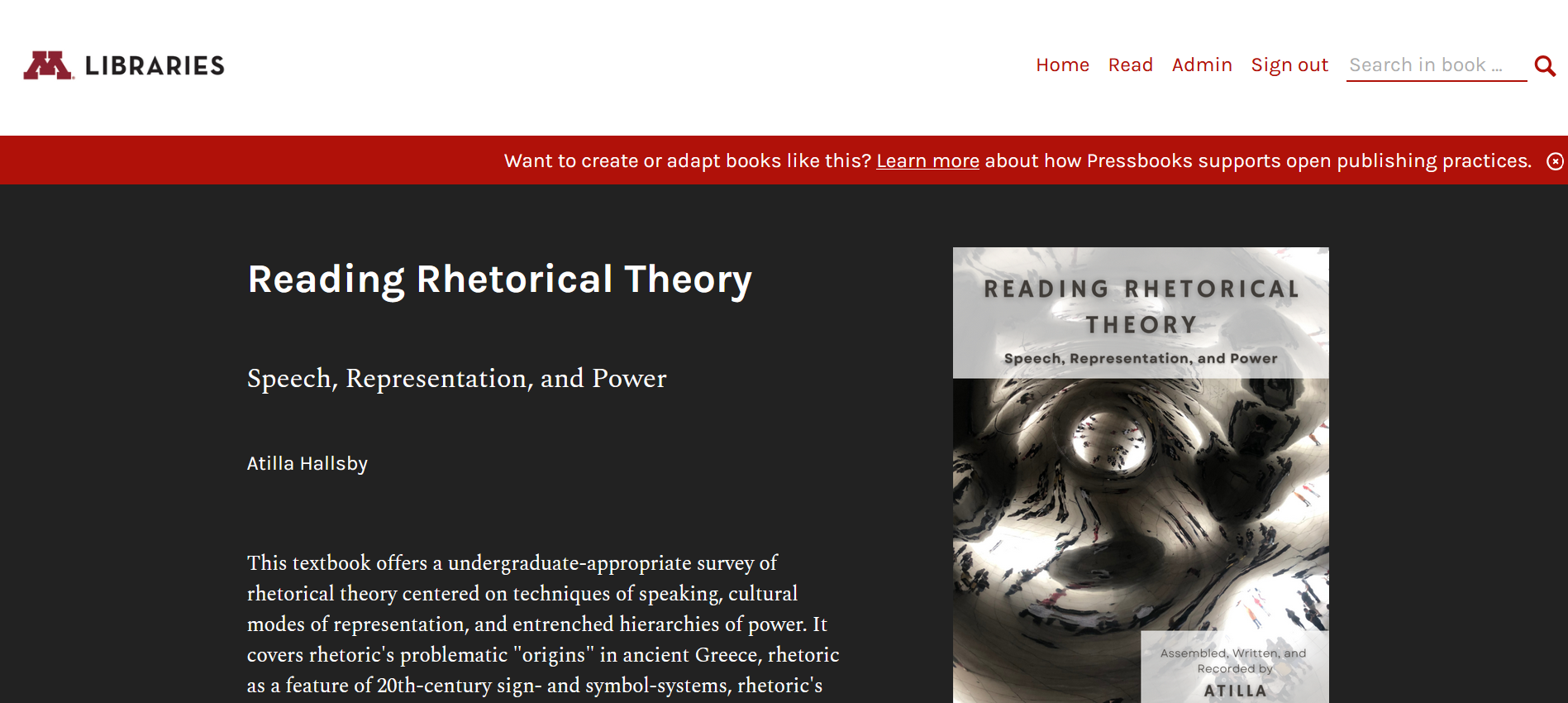
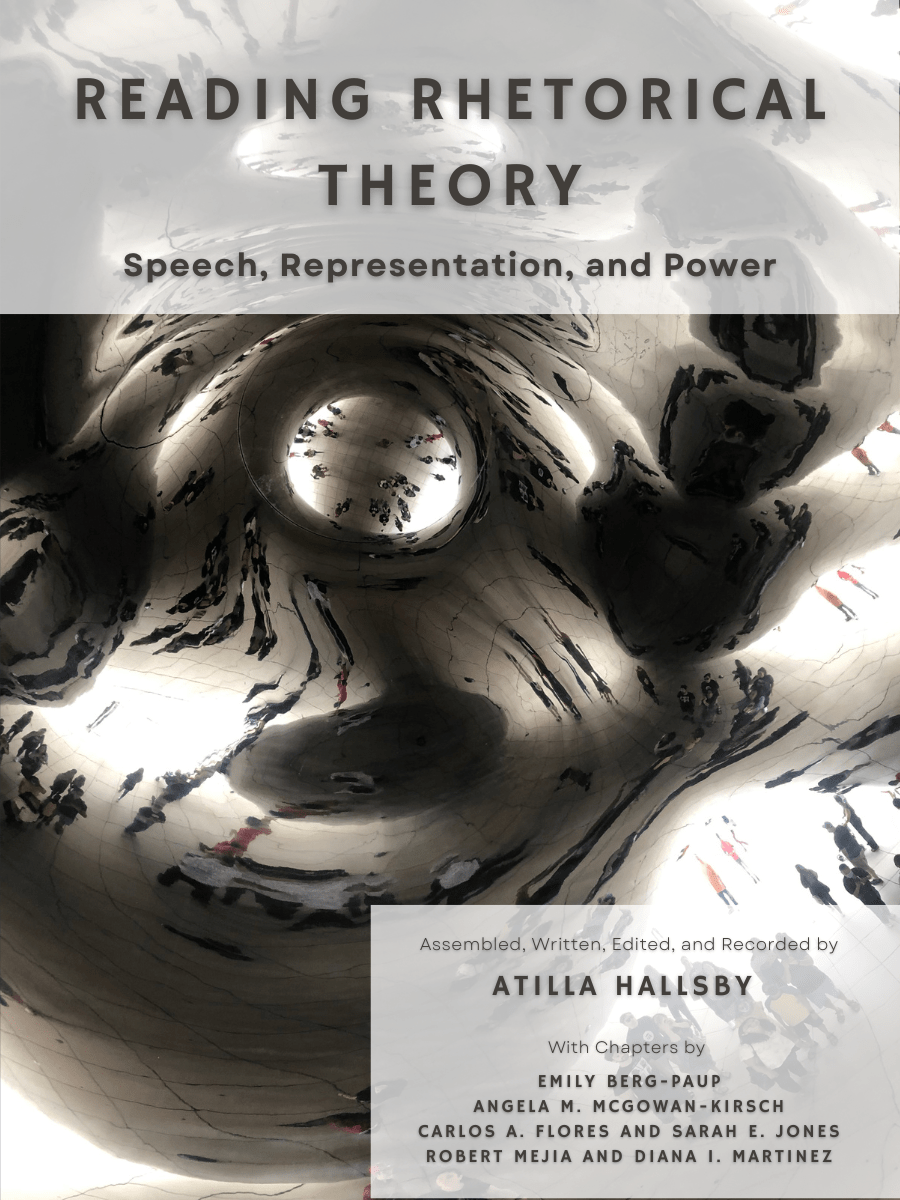
Reading Rhetorical Theory, the online textbook version of the UnTextbook of Rhetorical Theory. To view the book, go to https://open.lib.umn.edu/rhetoricaltheory

Find out more about RRT adoptions

If you have been using the UnTextbook or Reading Rhetorical Theory, I would love to have your feedback! I’m collecting testimonials from folks who have found these resources useful. I’ve set up this survey for folks, or you can send me a message at rhetoricaltheoryuntextbook-at-gmail-dot-com. Either would be greatly appreciated!

So, what’s changing?

Updates for Spring-Summer 2025

The UnTextbook is staying open, and you will still be able to access the course content posted there. By June-August 2025, however, some links may change, requiring updates to course syllabi before the Fall.

UPDATE #1: The UnTextbook of Rhetorical Theory

My plan is to replace the chapters on the main UnTextbook page with icons for the textbook and other course offerings:

  1. Reading Rhetorical Theory: Speech, Representation, and Power (this would direct you to the OER site).
  2. The (Undergraduate) UnTextbook Rhetorical Theory (you would be able to access the chapters currently posted on the main page).
  3. The (Graduate) UnTextbook of Rhetorical Theory.
  4. The Rhetoric of Secrecy and Surveillance.

UPDATE #2: Reading Rhetorical Theory

All Updates and Changes to RRT

The largest change to RRT is four new chapters from invited authors to Reading Rhetorical Theory in Spring 2025. This has required reorganizing the chapter order of that book. The new chapters include:

  • “The Public Sphere” by Angela McGowan Kirsch
  • “Counterpublics” by Carlos A. Flores and Sarah E. Jones
  • “Latine Rhetorical Theory” by Robert Mejia and Diana I. Martinez
  • “Rhetoric and the First Amendment” by Emily Berg Paup

Some things to note:

(1) the new chapters will not appear on the UnTextbook site.

(2) Although the order of the chapters is slightly changed as compared to what appears on this site, the content is identical (save for some new images).

(3) As always, there is no chapter 13.

(4) The links to “The Public Sphere” and “Counterpublics” will be ready in January 2025; the links to “Latinx Rhetoric(s)” and “Rhetoric and the First Amendment” will go live later.

(5) Finally, if you are considering switching from the UnTextbook to Reading Rhetorical Theory, know that the latter is more recently updated and has been copy-edited, meaning the content you’ll find there is likely more grammatically correct and up-to-date.

You can find updated links for the textbook below if you are looking to adjust your syllabus for an upcoming semester. The guest-authored chapters will go ‘live’ in early Spring semester 2025, but the links should stay consistent.

Updated ToC for Reading Rhetorical Theory

Part 1: Speech

Part 2: Representation

Part 3: Power

Assignments and Study Guides

New Teaching Resources: (Fall 2024) Graduate Seminar in Rhetorical Theory

With the approaching Fall 2024 semester, I’m posting some of the course resources I’ve assembled for my upcoming graduate seminar! I typically divide my course materials into several resource documents that allow students to access the course schedule/readings, assignment descriptions, day-to-day agendas, and handouts for my class.

Course Policies and Syllabus

This document contains course policies and the course schedule. Each topic heading of the syllabus (Race, Affect, Secrecy, Radicalization, Context, Canon, Form, Algorithm, Space, Time, Matter) includes an iceberg-like extended resource bibliography for papers, projects, and exams. 

Assignment Guidelines

This document contains writing advice as well as detailed instructions for presentations, responses, short papers, exams, and paper-length projects. Not all of the assignments described in this document will be assigned in a given semester. 

Weekly Agendas

Contains the plan for discussion on a given day of our graduate seminar.  Actively updated week to week.

Handout and Resource Repository

An index for the course. It contains items that I intend to distribute to the class (see below) and hyperlinks to the documents provided above. So far, my handouts for the semester include:

Primers (introductory materials)

I use my UnTextbook site to post the course notes generated in previous semesters, which function as introductory resources for each unit in subsequent semesters.

DRPC Privacy Week Presentation: “We Live In Public”

On January 22, 2024, the Digital Rhetoric and Privacy Collective hosted an online session titled “Teaching About Privacy in an Age of Generative AI“ with Drs. Calvin Pollak of the University of Washington (who presented “Navigating Publicity and Privacy: Genre-Based Technical Communication Pedagogy With, For, and Against ChatGPT”) and Reed Hepler, a Digital Initiatives Librarian and Archivist at College of Southern Idaho (who presented “Deliberately Safeguarding Privacy and Confidentiality in the Era of Generative AI”) and myself. The title of my presentation was “We Live in Public: Teaching Publicity, Privacy, and Secrecy.” Links to both the DRPC and a video of the presentation(s) can be found below.

“Reading Rhetorical Theory” featured in UMN Libraries’ “Targeting Textbooks Project” Fundraiser

As part of UMN Libraries’ “Give to the Max” campaign, Mark Engebretson, Shane Nackerud, and former students Rory King and Anna Larson (and yours truly) collaborated to produce this short video. Please check it out! Open access materials like Reading Rhetorical Theory can save students a significant amount of money, and ensure that course materials remain accessible across a range of modalities.

“COMM Students Save Money on Textbooks Thanks to the Libraries”

If you are teaching a class where this textbook might be useful and are seeking additional course materials, please reach out to rhetoricaltheoryuntextbook@gmail.com! I’m happy to answer your questions and share additional resources.

“Secrecy, Surveillance, and Settler Colonialism”: A Rhetoric Society of America Workshop (May 25-27, 2023)

Hi folks,

On alternating years, the Rhetoric Society of America hosts seminars and workshops for faculty and graduate students. This upcoming year, Dr. Michael Lechuga of the University of New Mexico and I will be leading a two-day workshop from May 25-27. The sessions will be held at Pennsylvania State University in College Park, with limited remote access. I’m writing now because the deadline to apply for this (and all other) sessions is approaching on October 15, 2022. Please follow this link to apply! As that site notes, applicants will be notified of your acceptance into a particular session (or multiple sessions) by November 15, 2022.

Below, you’ll find a description of our session on “Secrecy, Surveillance, and Settler Colonialism,” (also available via the hyperlink). I hope you’ll check it out!

Best wishes,

Atilla

Secrecy, Surveillance, and Settler Colonialism

Our topical focus is the rhetoric of settler colonialism with emphasis on erasure, disinformation, and conspiratorial reasoning, as exemplified by the dehumanization of migrants at the Mexico/US border, the “Stop the Steal” January 6, 2021, white supremacist insurrection, and the infiltration of colonialist themes in popular science fiction narratives. We invite participants to think through the connections between events like the January 6 insurrection, gun violence, and pandemic politics as explained through the lens of settler colonialism. Our workshop focuses on how the critical frameworks of psychoanalysis and assemblage theory are instrumental for rhetoricians’ understanding of the lasting legacy of settler colonialism in the United States. Together, we (Lechuga and Hallsby) represent expertise in both rhetorical criticism, assemblage/affect theory (Lechuga), and psychoanalysis (Hallsby). We offer attendees an affect-driven framework for emerging rhetorical scholars, designed with the specific goal of attending to Settler Colonialism’s ideological, material, and unconscious formations. 

Participants should expect to complete some assigned readings ahead of time and to submit a (2pp) statement about what they are already researching. During the session, we aim to discuss how the frameworks introduced during the workshop might be enlisted to revise or approach these topics. Position papers should also include a statement of participants’ goals for the workshop (e.g., creating a syllabus, conference paper, journal submission/revision, white papers/public facing, advocacy). The workshop will be divided between lecture and break-out groups/discussions. During break-out discussions, participants will also have the option to work individually or in a group (i.e., they may choose to be either self-directed or collaborate with others working on similar projects.)

Whereas Rhetorical Studies conventionally emphasizes the rhetorical situation/ecology as a general contextual framework for persuasion, representation, and power, we would advance arguments for understanding rhetoric’s persisting habitus as a Settler Situation, a set of recurring/repeating historical contexts appealing to topoi of jingoistic conquest, extraction economies, and racial purity. We offer the following framing questions: (1) How do we read and measure settler-colonial narratives/events? What is the archive of settler colonialism? If the archive is secret, what tools or techniques do rhetoricians have available to read it? (2) How does the Settler Situation redefine the conventional boundaries of the rhetorical text? What aspects of rhetoric’s conventional focus on public address and representation are retained by this framework and which are transformed by it? (3) How do (psychoanalytic/assemblage-based) theories of affect account for the combined psychological and material injury created by contemporary nationalist discourses? (4) How do present-but-unarticulated or unacknowledged affects produce recurring patterns of historical trauma? What can rhetorical studies contribute to the understanding of these historical patterns? 

Reading Rhetorical Theory

The UnTextbook of Rhetorical Theory is now an open educational resource with the University of Minnesota Libraries! Reading Rhetorical Theory: Speech, Representation, and Power is now available to read in a digital format or to download.

From the textbook page: This textbook offers a undergraduate-appropriate survey of rhetorical theory centered on techniques of speaking, cultural modes of representation, and entrenched hierarchies of power. It covers rhetoric’s problematic “origins” in ancient Greece, rhetoric as a feature of 20th-century sign- and symbol-systems, rhetoric’s role in crafting shared ideologies and belief systems, narrative-, argument-, and visual-based approaches to rhetoric, and a variety of different “situations” (rhetorical, settler colonial, secrecy/surveillance, and digital) where rhetoric continues to be found and felt in contemporary U.S. culture. This book also includes audio or video recordings for each chapter, recommended written assignments, and study guides for quizzes/exams. Developed in the wake of the 2020 global pandemic, this resource is designed for a range of modalities (online synchronous, online asynchronous, in-person, and hybrid). Additional materials (PowerPoint slides, quiz/exam questions) are also available to confirmed instructors upon request.

The Rhetoric UnTextbook

https://the-un-textbook.ghost.io

This open-access resource for college-level rhetorical theory classes includes chapters on the ancient history of rhetoric, the twentieth-century invention of the symbol and the sign, an overview of ideology, narrative, argumentation, visual rhetoric and the rhetorical situation, and coverage of topics like settler colonialism, secrecy/surveillance, and digital rhetoric. The resource includes an agenda for synchronous online teaching and 3 recommended “short paper” written assignments.

The UnTextbook has new course pages forthcoming, including a course page for “The Rhetoric of Secrecy and Surveillance” (to be completed by May 2022) and my “Graduate Survey of Rhetorical Theory” (to be completed by December 2022). Additionally, the main chapters of the Rhetorical Theory UnTextbook will be re-released as an open-access Pressbook with the University of Minnesota Libraries in Spring 2022.